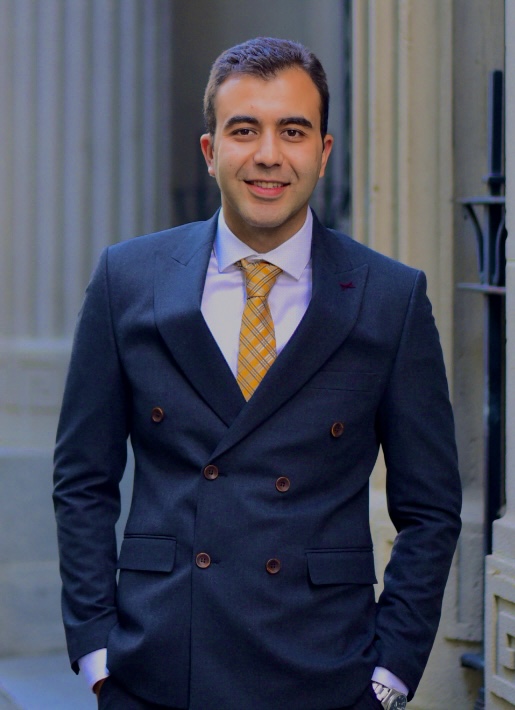
Ehsan Nouri
I am a postdoctoral research fellow at the Digital Technology for Democracy Lab at the University of Virginia’s Karsh Institute of Democracy. I study how digital platforms shape collective behavior from the bottom up, tracing how local interactions among individuals aggregate into higher-order patterns such as coordination, shared understanding, emotional contagion, and emergent conventions. I earned my PhD in Management Information Systems from Simon Fraser University in Vancouver, Canada, and my work draws on computational methods, organizational theory, and complex adaptive systems.
AI Social Simulation
Generative AI has opened a new way to study collective behavior: AI social simulation. In this method, a population of LLM-based agents is placed in a controlled setting, where the agents interpret situations, communicate, and respond to one another in natural language. Traditional agent-based models were limited to rule-following agents whose interactions reduced to predefined or stochastic behaviors. AI social simulation can take on far more complex, unstructured interactions, and it allows experiments on social systems at a scale no laboratory can reach. Researchers can observe how norms and conventions emerge, how conflict and synchrony unfold, how culture evolves, and how consumption patterns take shape. Experimental control over agent attributes, interaction structure, and environmental conditions lets the method isolate causal mechanisms that are costly or impractical to identify from observational data. The robustness of this control is improving rapidly.
More About Me
Beyond academic work, I have a deep interest in Persian poetry and occasionally write my own. My favorite poets include Fereydoun Moshiri and Forough Farrokhzad, whose depth and complexity of emotion and meaning illuminate both personal reflection and the prolonged sufferings and collective experiences of Iranians across generations. Philosophy is another one of my quiet delights, especially the exploration of value and moral clarity in times of cultural transformation. I believe meaningful change begins with a thoughtful understanding of the guiding philosophies that shape human and societal value. These grounding ideas help us reinterpret tradition and imagine the future with responsibility and continuity, rather than reinventing every wheel. Much of the loss of meaning and direction in the modern world arises from discarding the compass we already possess and attempting to redraw a landscape we have not yet understood. This perspective shapes both my scholarship and my broader reflections on human experience.